
All Knowledge Is Contained In Fandom
The Furry Expertise Network

Please like, subscribe, restack, and share this article if you think it is useful. I want to do this for a living and your support means the world to me.
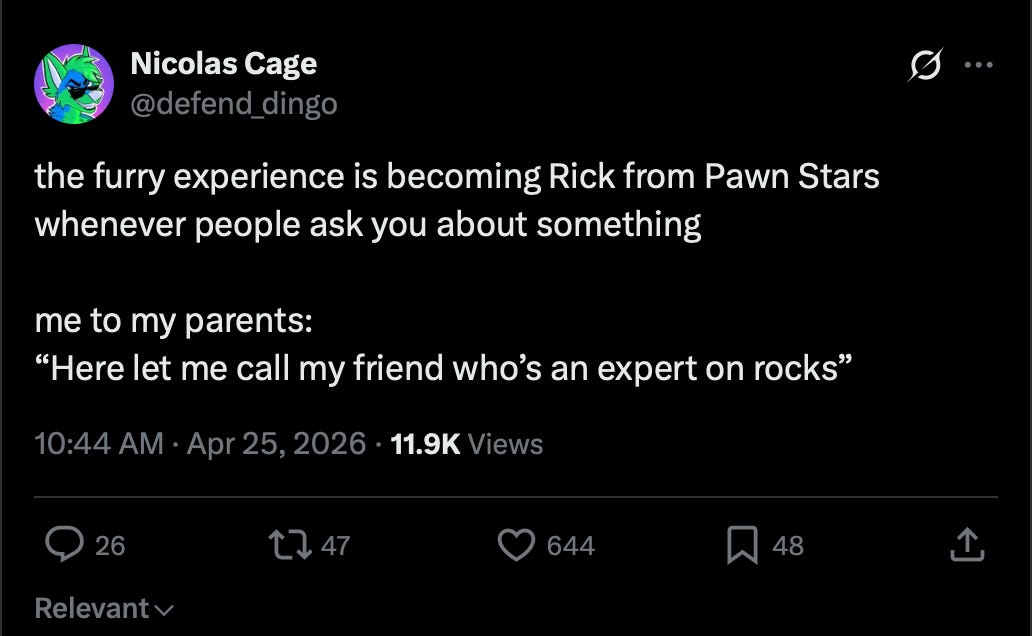
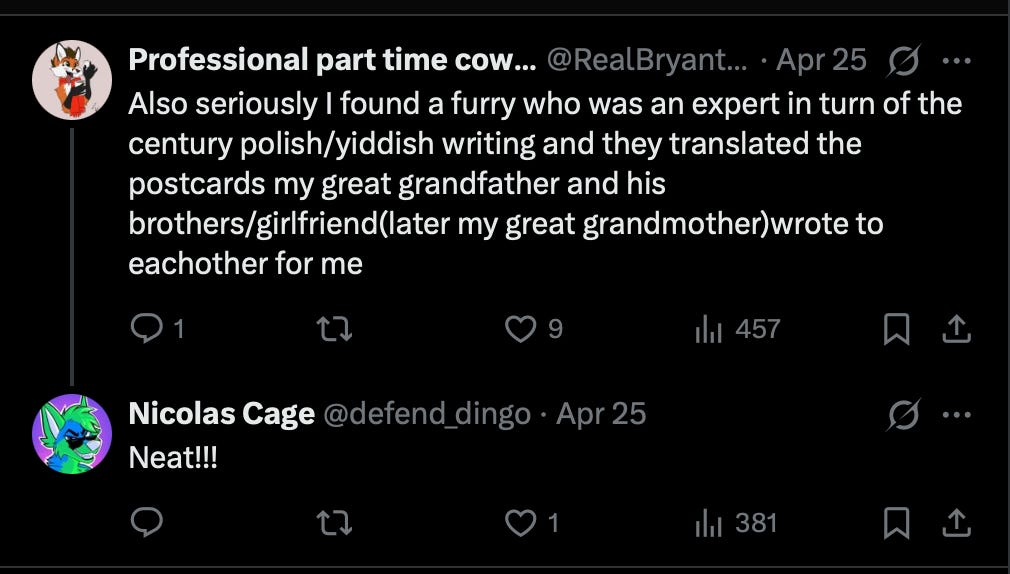
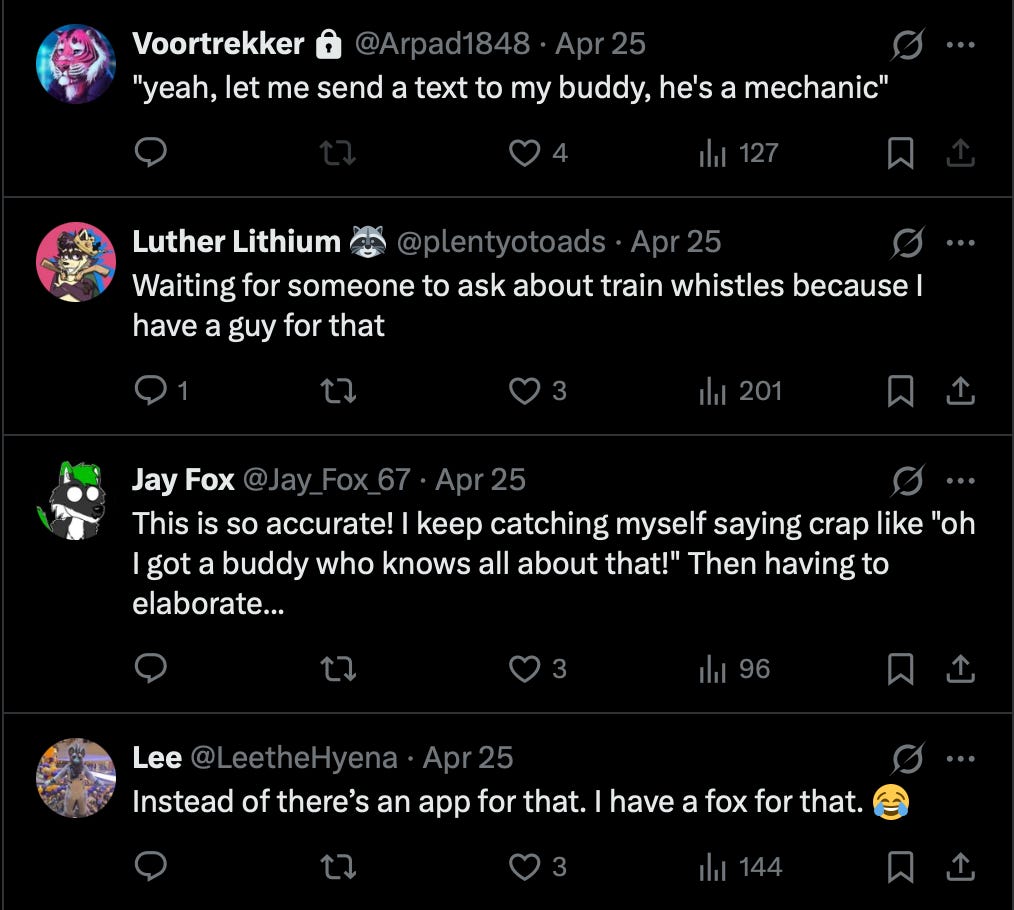
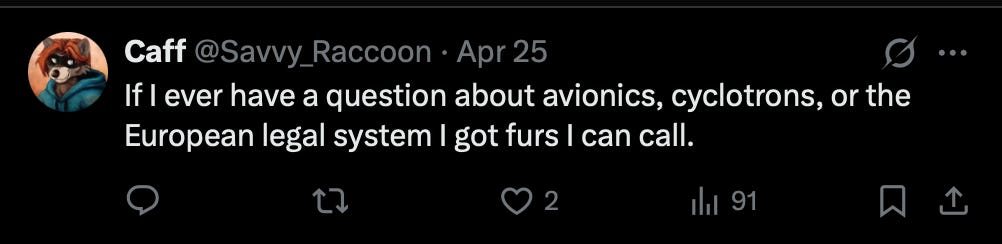
(I was going to put this paper on the backburner but I realized it was too good to leave behind. If anyone knows Rick Harrison, or someone who might, I would appreciate them sending this along.)
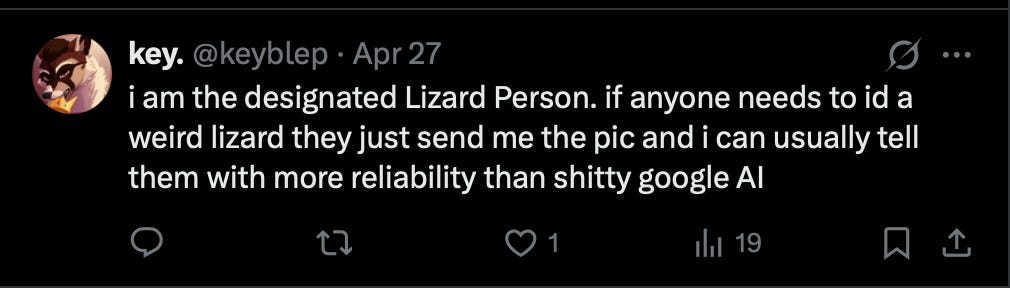
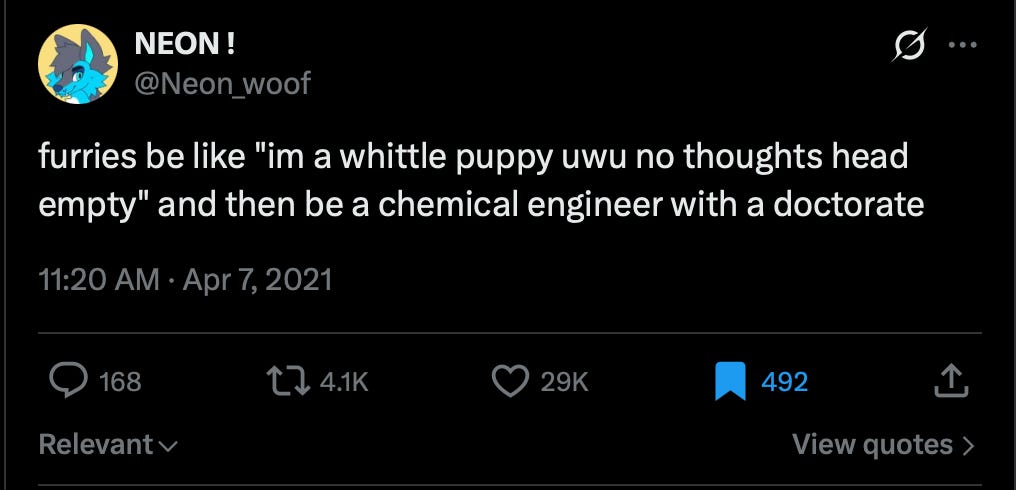
These tweets are onto something. Having a broad mix of backgrounds may be a reason furries flock or herd toward each other. Creating an increased reliance on the fandom as a sense making organ may illustrate a contributing factor as to why it is easy to become a furry lifestyler.
As a furry I have had the benefit of meeting people from around the world and learning from them. This is a global phenomenon with global appeal and global influences.
A Virtual Library Of Alexandria, Or At Least, Our Best Attempt At It.
A science fiction author named Anthony Boucher coined the phrase “All knowledge is contained in fanzines.” What he meant was there were fans of sci-fi who were able to incorporate many different levels of expertise into their works of fan-written fiction. Everyone had a voice they brought to the table and that made the fiction they created way richer.
That phrase has morphed to reflect a broader understanding that people come from all backgrounds, bringing a level of professionalism and knowledge to whatever fan community they join. The phrase has become far more extensive and all encompassing to reflect that.
It is now, “All knowledge is contained in fandom.”
“It is not titles that honor men, but men that honor titles.” Niccolò Machaivelli ”
For neurotypical people the so-called “Halo Effect” can smuggle in a great deal of respect for someone based on their perception of the person’s expertise in one domain. People naturally assume that if someone is intelligent enough to perform high level math they must also be experts in politics or science. They can be related but they can also be independent. There are many examples of people who are geniuses in one area but extremely moronic in others.
They mostly also defer to status, seeing someone’s status as a potential indicator of their competency. That is more than often very accurate. People with money may have that money because they may be able to navigate bureaucracies and red tape. They may have it because they have special insight into technologies. They may have it due to a capability to network. Where they are is where they are.
For NTs, however, the appearance of status can be in itself a barrier to engage with someone. They can see talking to someone at the top of a corporate hierarchy as a very risky move, one that courts the risk of being fired. There is always an understanding of the hierarchy and one’s place in it. They are always keenly aware of the risk and reward dynamic inherent when they interact with them.
Those that are lower understand they are lower until such time as their hard work results in some upward social mobility. Until then, they learn to respect how things are, keep their head down, and work.
Type 1 autism’s hallmark is that we are invisible and indiscernible from the main population. If we were on the bus next to people or in line at the grocery store they wouldn’t be able to tell. It is only when we start talking to them that they become keenly aware something is different. We are finding more and more examples of that in public. We just seem off in a unique way that may take some time to understand, time some important people aren’t willing to give us.
Intrinsically we may not understand the full scope of individual to individual dynamics and will just walk up to somebody. It doesn’t matter how rich or how influential they are, we just stroll up and act like we belong there. I have done that more times than I can count.
The issue is that, if they aren’t aware of our social deficits we can and do appear a bit pretentious and way ahead of ourselves especially by how casually we can just blurt out our opinions. By not playing by the rules and staying in line we can doom our chances at getting the result we want, whether it is a job, mentorship, or a partnership.
Social Onion Theory Redeux
In my article on Reality’s Last Stand I mentioned this and used an onion to illustrate normal levels of social interaction.

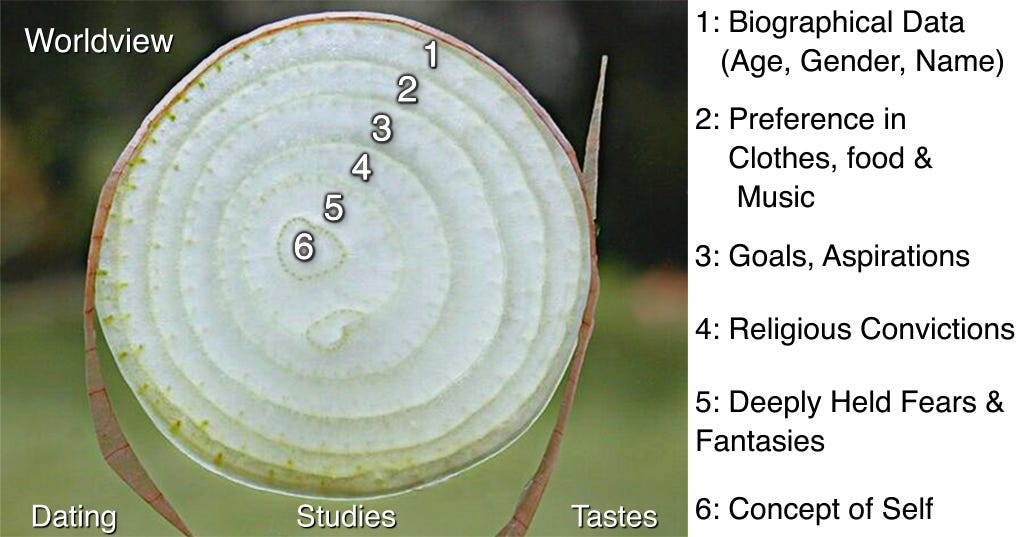
Social Penetration Theory states that social interactions are like an onion. The most normal kind of social introduction begins at how old we are, what our gender is, and what our name is. Arguably for NTs it also starts at an innate understanding of what class the other conversant is and what social risk they are in if they step out of line.
Recently King Charles III visited the White House and delivered a speech in which he recounted an apocryphal story about Sir Winston Churchill appearing naked in front of President Franklin Delano Roosevelt. Churchill said “The Prime Minister of Great Britain has nothing to hide from the President of the United States.”
In this vein, Furries invert how introductions normally work. We know the person’s most personal and private concept of who they are and want to be, their sexual preferences and interests, and their deeply held fears and fantasies as our first impression. We may also know what they do for a living and a vague idea of where they live. We, too, will probably get a sense of what they can do and what they know rather quickly by what they advertise on their FA profile and X and BlueSky bios.
We also can see if they have open social media contact info. The ice has probably already been broken well before we say hi. Furries rarely have anything to conceal from other furries other than things further out from the middle of the onion. We both know the most weird and extreme thing about each other and have just made that our first impression. By starting more openly, more blatantly, and more candidly we immediately strip down all social pretense and can deal with each other on more equal terms.
The lack of traditional social limiting factors makes it very easy to mix it up with people who are radically different from ourselves and potentially higher on the social ladder than we are. Stripping that away means the interaction is less an act of benevolent attention for someone on the lower rungs of the social ladder and more an understood assumption that we are all here to be fake animal people.
Who cares where someone came from, do they have a kickass fursona?
Dogs And Cats With Degrees.
In a previous article I wrote about how many furries have advanced degrees of some kind. According to Furscience a vast majority, 75%, of furries have done at least some post-secondary education. That we can so easily get into colleges is an indicator of competency in at least some academic fields. That is a rough indicator of a higher average IQ.
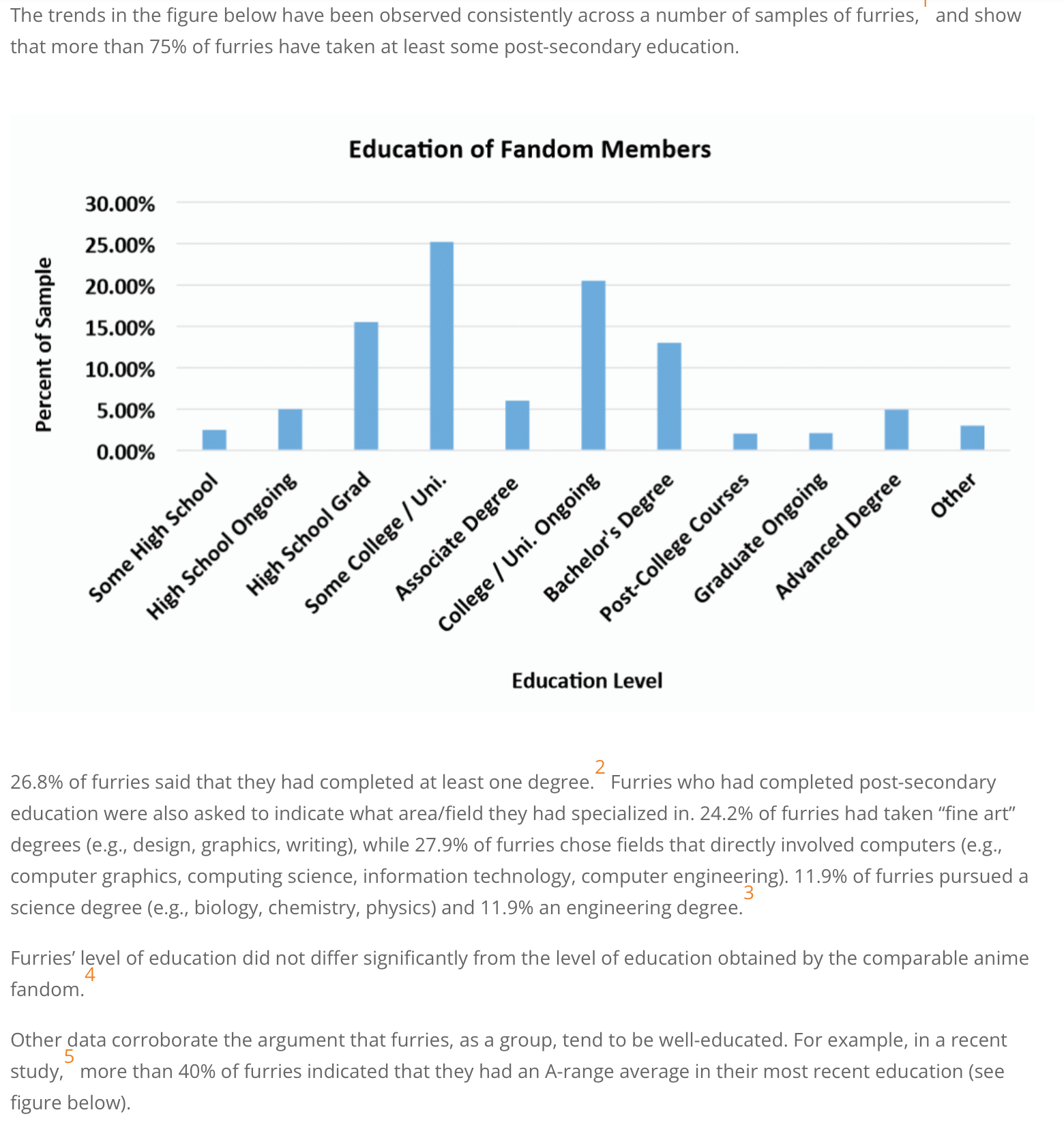
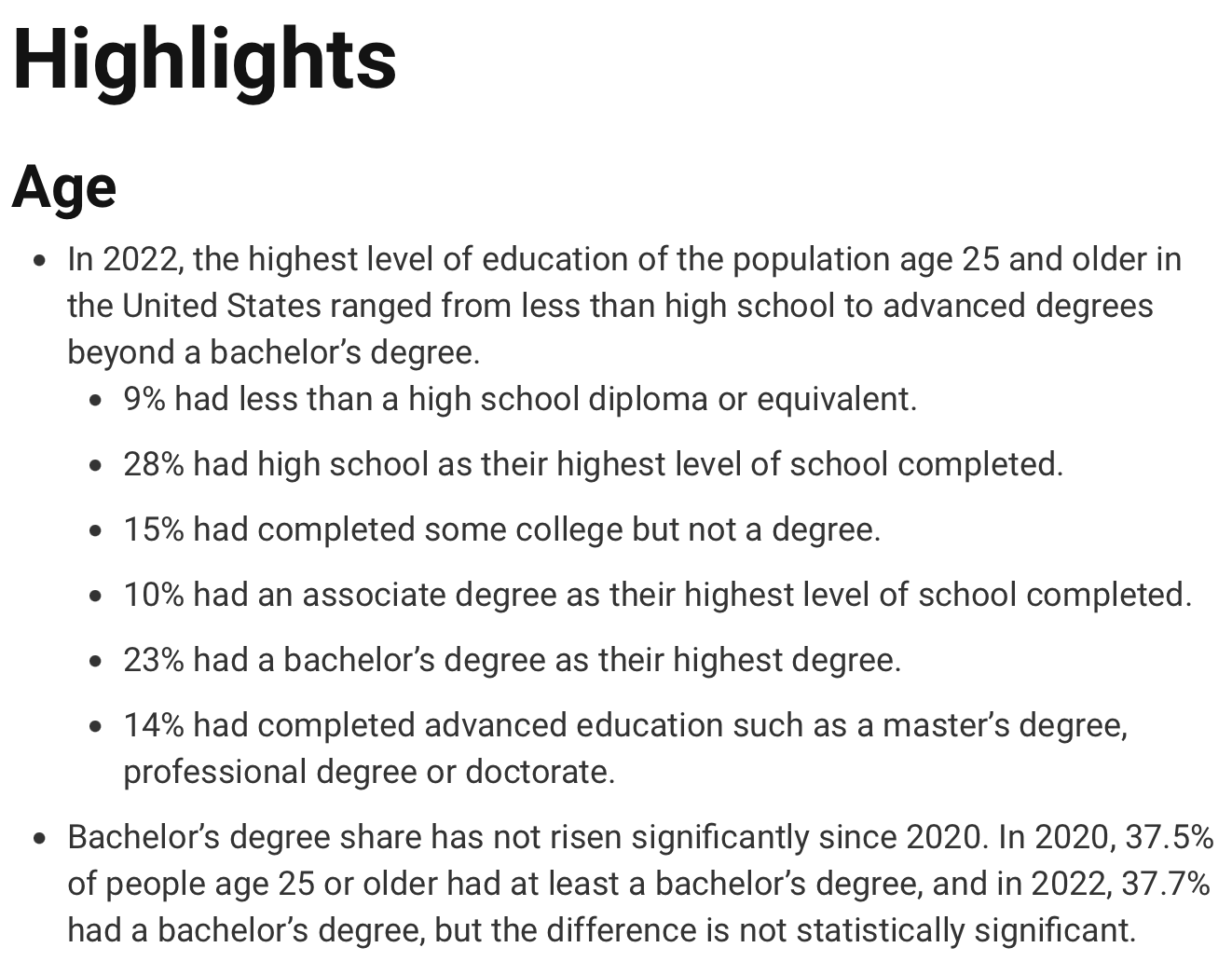
The furry fandom too, has a lot of people with Bachelor’s degrees. With roughly a quarter of our people having some degree, that is on par with normal society.
Surprisingly furries have on average a third the number of advanced degrees as the normal population. According to Census.gov 14% of people have a Masters or Doctorate Degree.
(This could be because with upward income mobility people have a tendency to meet future spouses in college, get a very successful job, get married, and have kids. That tends to make people leave the fandom.)
What is different, however, is that the people with such qualifications are more easily accessible to us. In general, when they join the fandom and start participating, that strips almost all pretense from the interaction. It can also make them appear more prevalent.
This panders strongly to neurodivergent minds. As said earlier in this post, we struggle to understand why social barriers exist. If anything removes that challenge we appreciate it. We prefer anything that makes things simpler and makes us feel less alien. Even if we are playing an alien fictional creature that opens doors rather than shutting them.
This also means the fandom treats us like we wish the world treated us. Matter of fact and immediate. If people need to know something, asking about the weather (unless there is a major emergency) and sports teams isn’t helpful and wastes time.
I hate small talk. I just want to know about the thing. Tell me about the thing please.
We also get a very welcome opportunity to talk about things that are passionate to us beyond the fandom itself. We get to geek out about whatever history, science, or activity that we fixate on and assume some level of expertise about.
Research does not show that autistic people are universally “more aware” of their cognitive limitations than non‑autistic people, but several studies indicate that autistic adults often engage in more deliberate, explicit self‑reflection about their functioning, especially when navigating work, social demands, and support needs.
This can look like heightened awareness, but it’s more accurate to say autistic people often develop different patterns of self‑awareness, shaped by lived experience rather than an inherent trait.
This too can lead to an over reliance on other people in our lives if we are competent enough at identifying competence in other people. It also means we are more apt to tap out early and ask for help. If an expert or enthusiast furry is available via a quick Telegram message right now and a real life expert takes 3 days to reply, it is very easy to see who gets contacted first.
“The credit belongs to the man who is actually in the arena” - Theodore Roosevelt
Here’s a handy explanation.
Metaphorically I assume that neurotypical people look at someone who bought a Mustang, Lamborghini, Ducati sport bike, and/or old fighter jet as someone who is signalling status. They see that as the end. They are like an Omega or Breitling watch or Armani suit. They aren’t meant to be anything but objects to signal who they are and how much they are worth.
Autistic people may rely on defined structures and feedback. We look for results and competency rather than social heuristics, status inference, and fluency-based confidence.
As an autistic person I see them as posers unless they have driven the car or ridden the motorcycle at its limit and in the arena it was supposed to be driven in. It is worthless to have a MIG fighter jet and fly it at 450 knots, it can go faster than sound, do it.
The fandom, by being almost totally anonymous, has an intrinsic tendency to strip away said social heuristics, status inference, and fluency-based confidence. It forces people who advertise their passions and vocations to deal only in language that testifies to their competency and the results of their professional prowess and/or general knowledge rather than their social station and implied authority.
To return to my metaphor, it makes them get on the track or in the air and do the thing that their possessions say they can do or, at least to be honest, that it is a fantasy.
However, both NT and ND people can benefit greatly from the way the fandom has evolved and attracted all sorts of people. By stripping pretense and boastfulness there can be a more accurate read of someone’s professional abilities than in the normal world.
“This is way out of my wheelhouse”
(Please do not contact any of these people I am mentioning in any way. I am using them as a way to explain how expertise sometimes manifests in the fandom).
As I mentioned in my debut article on Reality’s Last Stand there are furries who host their own shows as a pretty good second or full-time job on Twitch. Sometimes they just set up a camera and broadcast with their own face, though mostly they use new VR technology to become a virtual avatar version of their character.
They mostly play video games or just chat with their audience.
Having come from other professions they often add experienced commentary whenever they see a need. Several famous streamers are actually somewhat well known to give professional commentary and actually offer advice on their shows very much like public access TV used to.
A streamer named CinderCollie is an emergency room nurse whose main character is a blue border collie. During the COVID-19 Pandemic he would stream lectures on health related topics, like how to read an EKG or the mechanics of the renal system.
If people in his audience have general medical questions and have enough channel points (earned by watching his stream) saved, they can ask him and he will gladly answer to the best of his ability, whenever there is a lull in his gameplay.
Another named Snowyfluff plays a lavender husky online and is also a contract lawyer. He occasionally lectures on legal matters like scams or fraud. He explained how the Honey scandal worked better than I have seen anyone break it down.
(Note, this is not his explanation but this is to help explain what I am talking about)
Yet another named AydanFox retired from a successful career as a chef to Twitch stream, professionally playing a pretend virtual gray fox as his only job. He takes cooking questions on his stream while playing video games and just chatting.
Finally, Fusano is a pretend squirrel and personal trainer. He takes fitness and dietary questions on his show.
This is not to say that chatting with Twitch streamers is the only way to get help.
A Skattering Of Examples.
Most of the time I just use a message on Discord or Telegram. I personally can reach out to a plumber, welder, auto mechanic, locksmith, a medical doctor, any number of engineers, a few scientists, a few professional historians, two economists, many truckers, oil field workers, and yes, I know a geologist.
If any one of my expert friends don’t know, there are Furaffinity groups about everything for me to ask.
We have built support structures for nearly anything. If we haven’t it’s very easy to build one. This started with hobbies. It became about professions. However it still remembers its roots.
Here are some examples to show just how diverse our subcultures within subcultures can be.

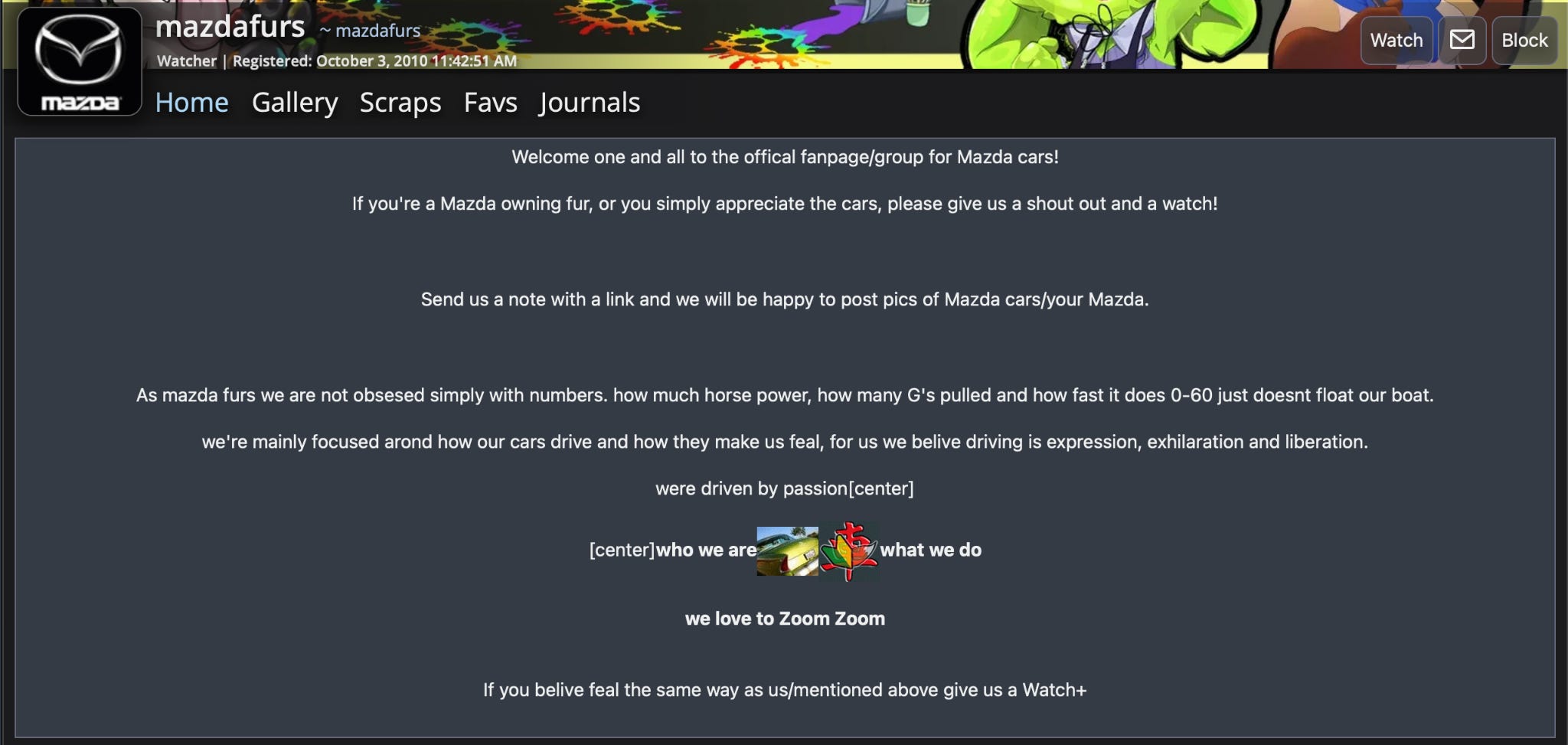
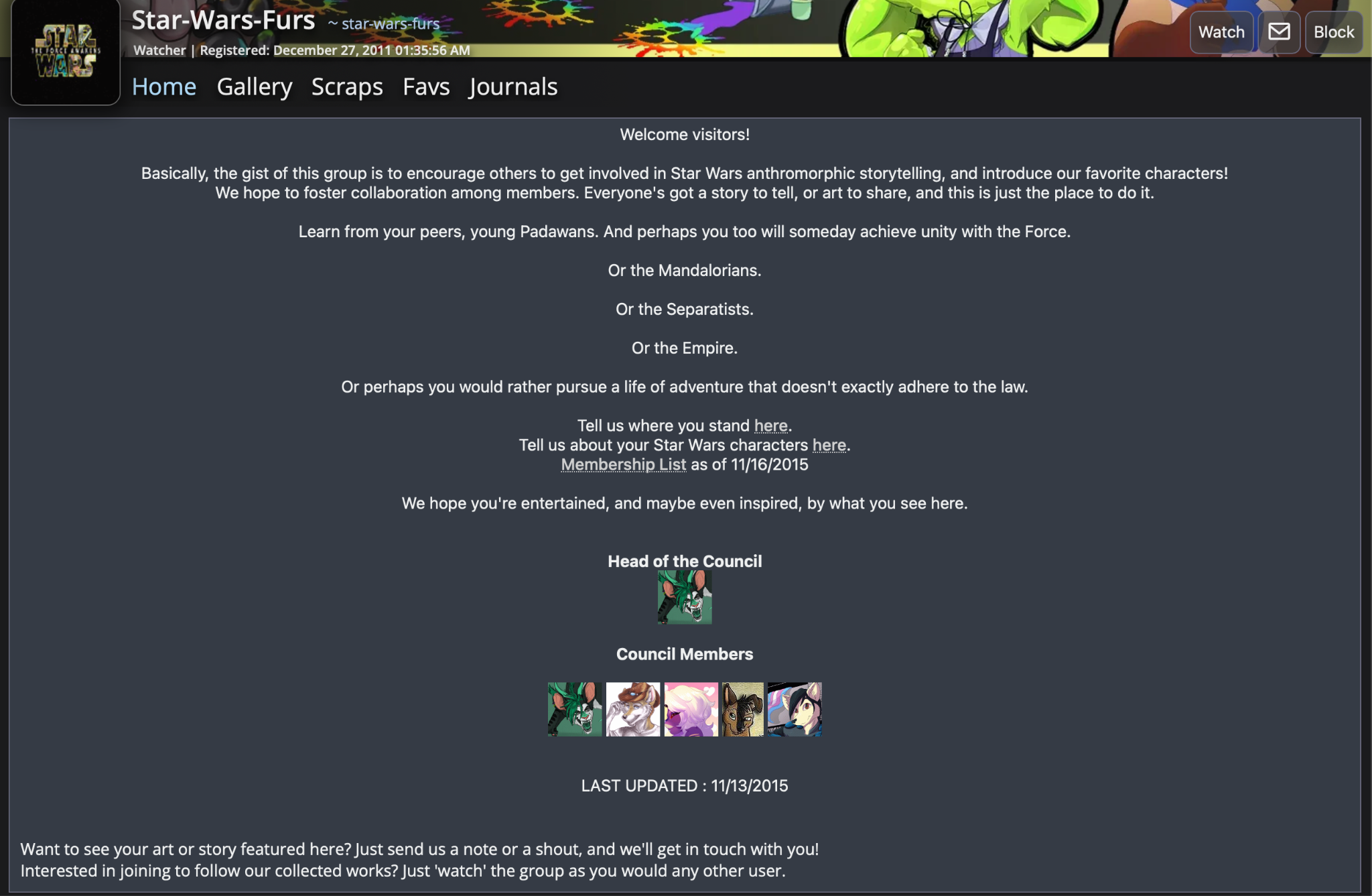
This can even go beyond hobby interests and can be for professional networking and sharing vocational news.
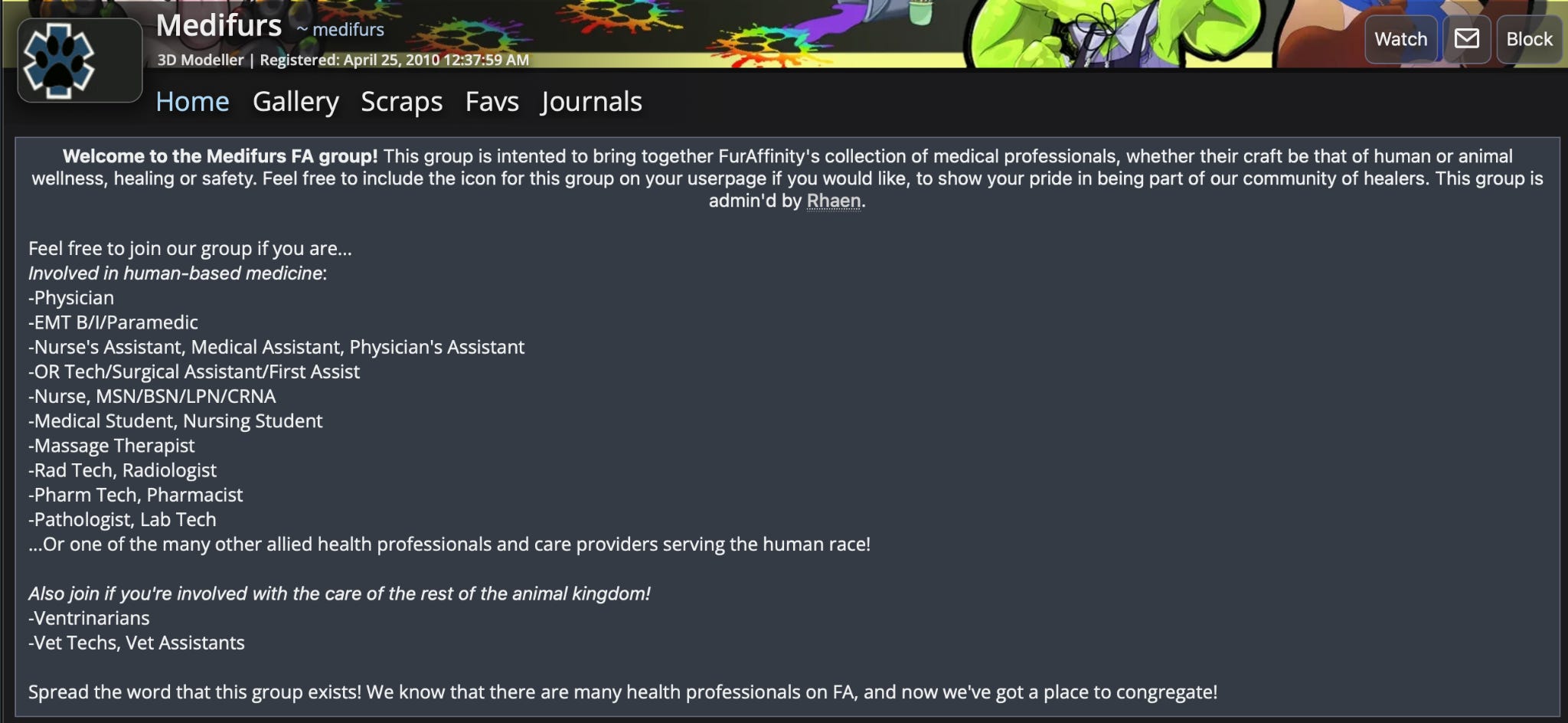
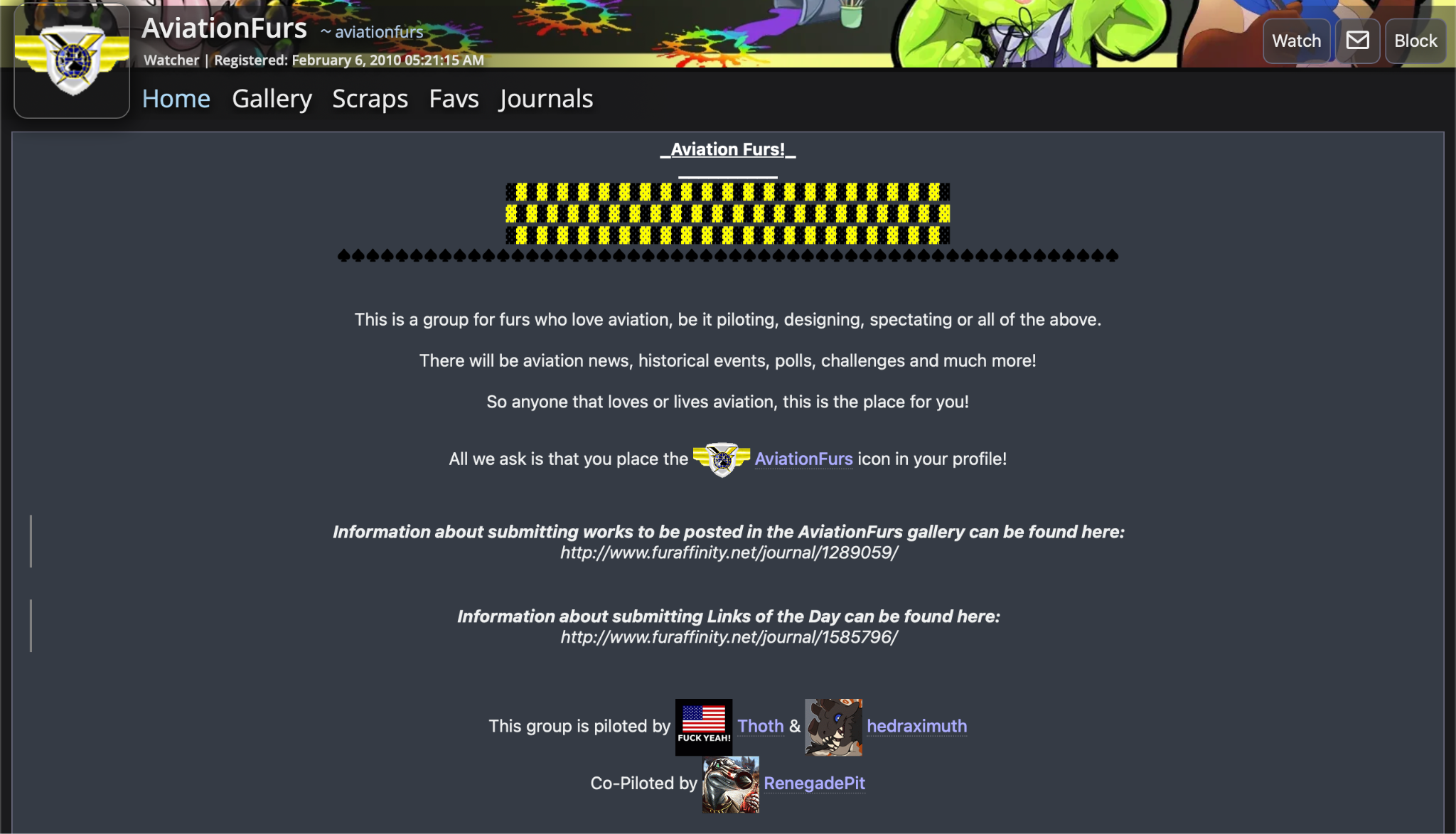
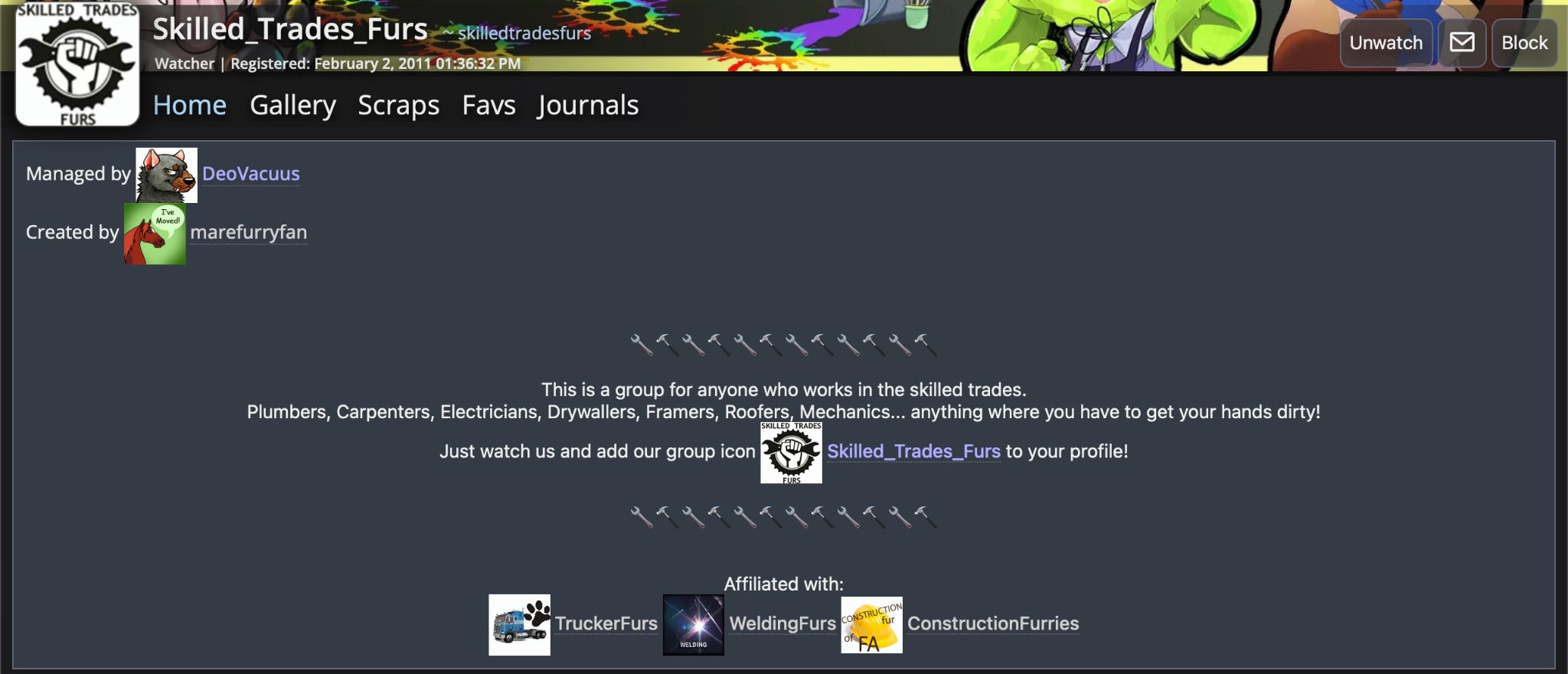
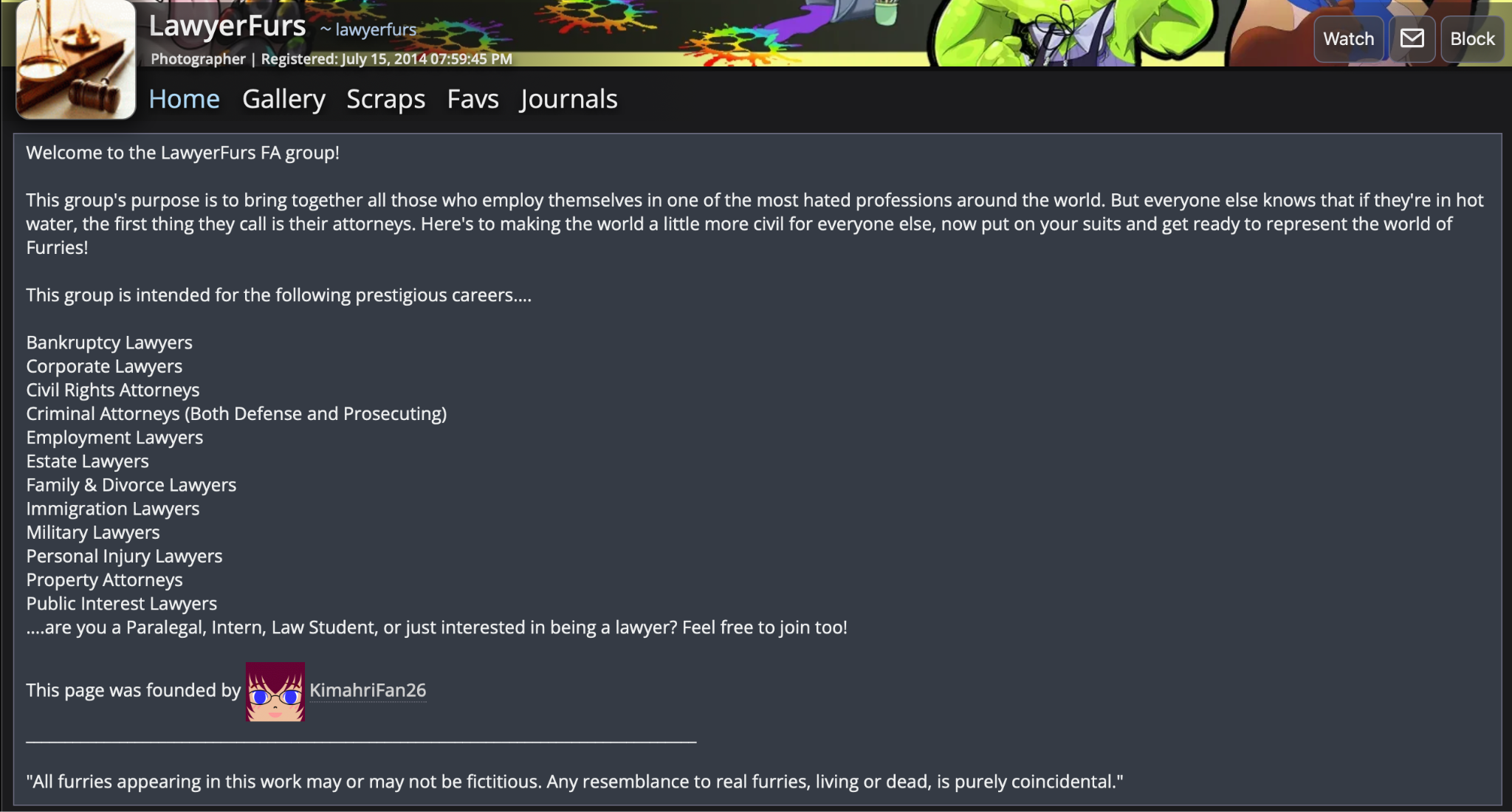
Normally these pages and groups will have Discord servers or Telegram chatrooms that someone in that profession can join. They may or may not welcome outsiders but, if they do, that can help us stop trying to find someone to help and get the exact answer we need now.
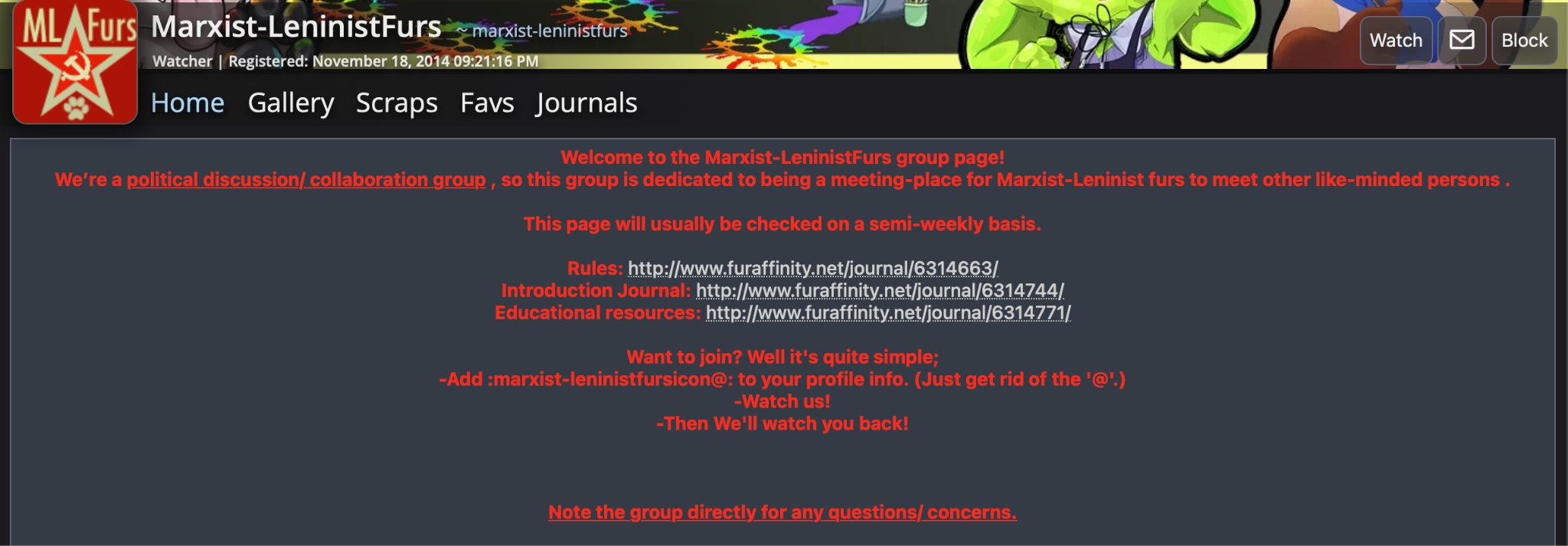
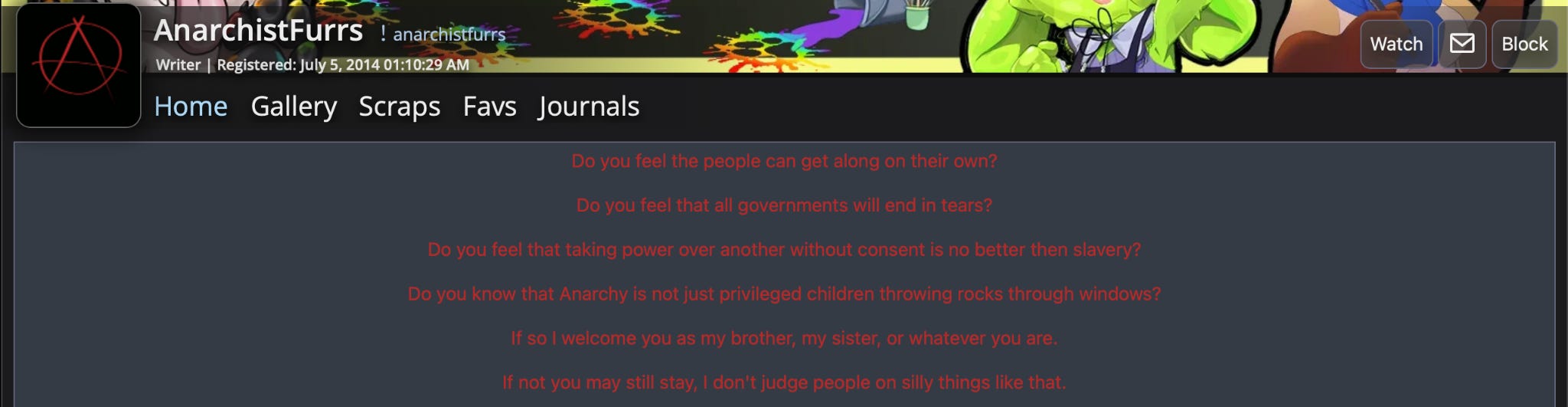
Now, apply that to politics.
Conclusion
Asking a furry to leave the fandom can be akin to asking them to defect from a nation. This is a gamble that the world itself will offer easier professional access better than the fandom does. I hope I have shown you just how challenging that is for normal society to compete with. Furries know a lot more than what is superficially evident.
Because this is such an open concept and not specific, the opportunity to apply real life knowledge and experience can be more attractive than most other fandoms. If there are minimal rules then there is an added draw to create rules. Applying what one knows to this is a handy way of casting an anchor.
Knowing how other people have defined their game can inform us how we can adapt our game to match. To a mind that is attracted to defined structures, that is a godsend. However, if that is adapted to misinform or malinform people then that is another thing entirely.
If someone becomes reliant on the fandom, or any resource, they can potentially see it as an authority on everything. That authority can guide thoughts on many subjects.
It is very easy to apply labels and assign roles to people. It is very easy to know what someone can do and how well they do it. Problems arise when competent people are able to use their proficiency in one area to manipulate people in others.
This hits harder in fandoms like the furry community because of how easy it is to contact us and how insular we are. Donald Trump’s 2016 victory was arguably the greatest political upset in American electoral history. When uncertainty hits, in that case like almost every freight train in the USA, people react by retreating to safety. In this case retreating led them to a largely left-leaning and woke community that used their perception as authorities and sense-makers to reinforce their priors.
This is why publications like The Cultural Barxist are not un-serious. They are cultlike propaganda masquerading as comforting furry media.
I love how I can get in touch with an expert in the fandom, I dislike those that act like experts to propagandize my friends.
IMO Furry nepotism is unknown only to normies 😄
Cultural Barxist was made by like two randos; it's a very annoying publication sure, but I think you're giving it more influence than it deserves.